





7 Pillars Anchoring the Palestinian Narrative
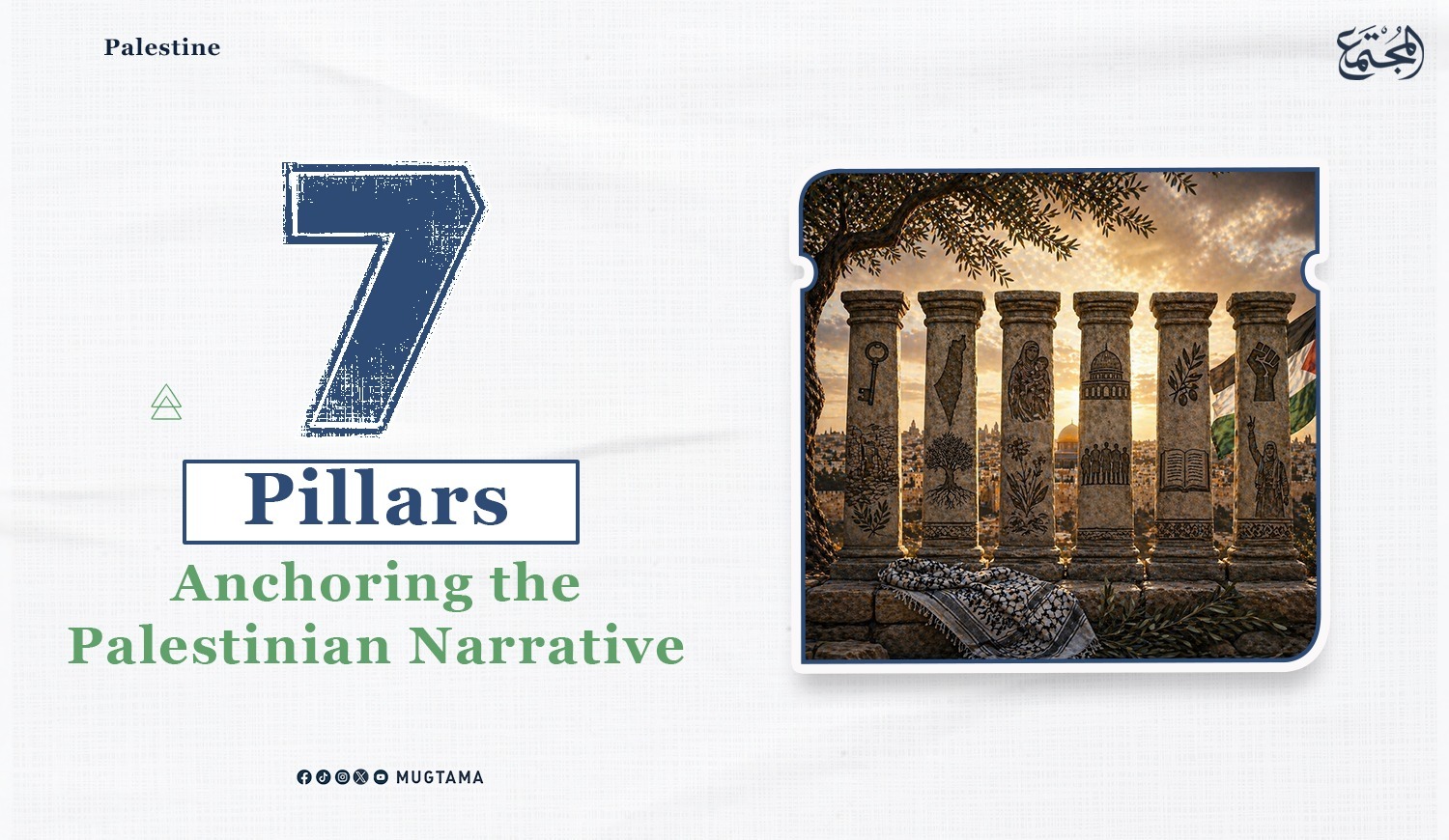
The “Palestinian narrative” is not a fleeting political slogan
or a chant raised in demonstrations. It is the story of an entire people,
forged under pressure, matured in exile and refugee camps, and shaped under
occupation. This narrative was not written in ivory towers but carved in blood,
memory, and the keys hanging on the walls of displaced homes. Despite factional
differences and diverse platforms, seven defining pillars give this narrative
its cohesion and ensure its survival across generations.
The Palestinian narrative is not a temporary political
discourse but a collective consciousness formed over more than a century. It
has become one of the longest-standing resistance narratives in modern history.
It is the story of a people uprooted in 1948, occupied in 1967, besieged since
2007, and subjected to more than eleven wars on Gaza alone
since 2008—yet still preserving the unity of its core story. These seven
constants form the backbone of the narrative.
1. The Nakba as the Foundational
Point
No understanding of the Palestinian narrative is possible
without passing through 1948, when the so-called “free world” conspired with
Zionist militias to uproot an entire people from their land, history, and
memories. The Nakba is not just a date in a textbook; it is the founding wound
of modern Palestinian identity. Forced displacement, destroyed villages, sudden
exile, massacres, and crimes committed by Zionist gangs created the collective
trauma that continues to shape the conflict.
Historian Benny Morris admits: “The Nakba is not a passing
event but the foundational moment of the entire conflict.” Late President
Yasser Arafat often repeated: “The Nakba is not a memory but an open wound
in the body of the nation.”
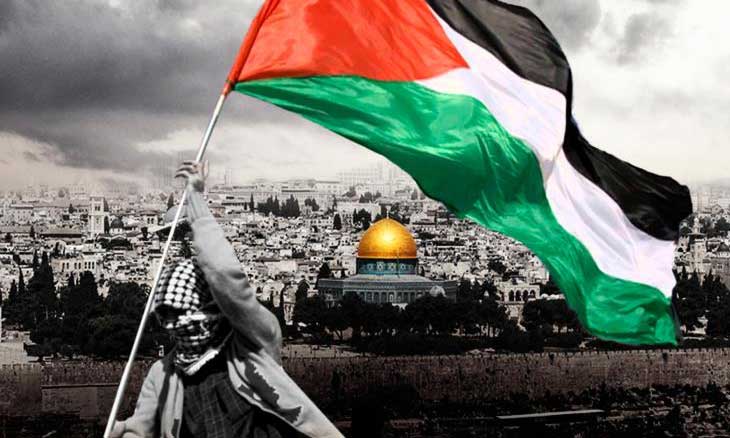
2. Jerusalem as the Compass
If the Nakba is the root, Jerusalem
is the crown. No Palestinian narrative exists without Jerusalem at its heart. Al-Aqsa
Mosque and the Church of the Holy Sepulchre elevate the cause beyond
geography, making it a global Arab, Islamic, and Christian concern. Any
violation of Jerusalem unites Palestinians across the political spectrum.
Jerusalem gives the narrative its sacred dimension, transforming the struggle
from a border dispute into a defense of meaning itself.
3. The Right of Return as a
Non-Negotiable Claim
Today, more than 6.4 million Palestinian refugees are
registered with UNRWA across Gaza, the West Bank, Jordan, Lebanon, and Syria.
In nearly every Palestinian household, an old key or Ottoman/British land deed
symbolizes that return is not a slogan but the essence of justice. UN
Resolution 194 (1948) explicitly affirms the refugees’ right to return and
compensation. As Edward Said wrote: “Return is not geography but the
restoration of dignity.”
4. Land as Identity, Not
Property
For Palestinians, “my land” means more than geography. It is
embodied in a 500-year-old olive tree, a stone from a grandfather’s house, or
the scent of wild thyme. Losing land is not losing property but losing part of
the self. Palestine hosts more than 12 million olive trees, some dating back two
millennia. Since 1967, Israel has confiscated over 2.3 million dunams of land
and demolished more than 55,000 homes.
5. Resistance as the Only
Alternative
Resistance prevents the narrative from becoming mere
lamentation. From the 1936 revolt to the two Intifadas (1987 and 2000), from
popular to cultural resistance, Palestinians have upheld the equation: We
are oppressed, but we resist.
The UN documented more than 7,000 Palestinian martyrs between
2000 and 2023, in addition to thousands of wounded and imprisoned. Since
October 7, 2023, over 72,000 Palestinians in Gaza have been killed, including
countless children and women. Resistance is not only armed struggle but also
Mahmoud Darwish’s poetry, Tamim al-Barghouti’s verses, Ismail Shammout’s
paintings, the Prisoners’ Document, Sheikh Jarrah protests, and Hind Rajab’s
film.
Nelson Mandela once said: “Our freedom will not be complete
without the freedom of the Palestinians.”
6. Deep Roots That Never Broke
Against the Zionist claim of “a land without a people,” the
Palestinian narrative asserts rootedness. Embroidered village maps, dialects,
and preserved place names—Nablus, Gaza, Jerusalem—stand as proof. Jericho’s
Canaanite ruins date back over 10,000 years. Arab and Islamic history further
testifies to uninterrupted presence. To be Palestinian is to inherit layers of
civilization on this land.
Historian Arnold Toynbee affirmed: “The Palestinian people
are not incidental to history but a continuation of a long civilizational
chain.”
7. The Diaspora as Extension,
Not Substitution
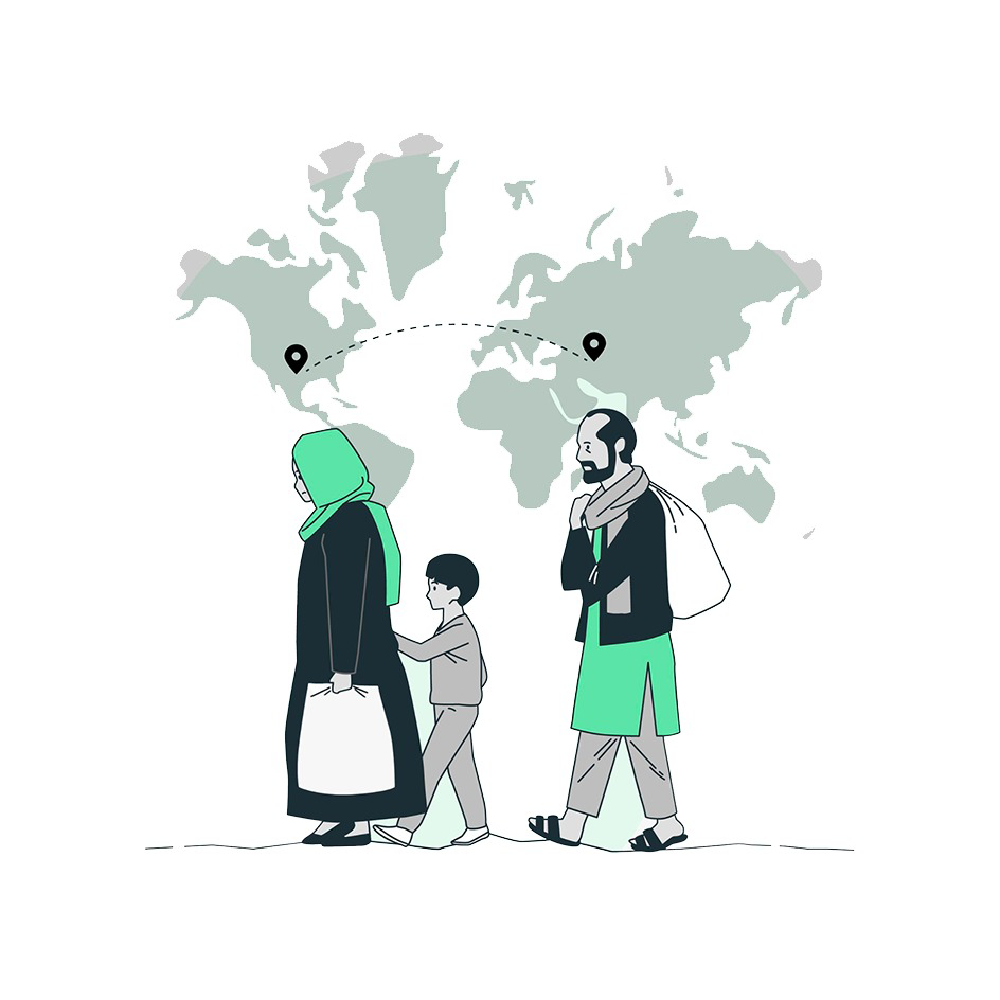
The narrative transformed refugee camps from temporary
shelters into carriers of national memory. Refugees in Beirut, Yarmouk, or
al-Baqa’a identify not with their birthplace but with their ancestral village.
This made the diaspora an organic part of the homeland, not its margin. More
than half of Palestinians live outside historic Palestine, yet the narrative
resists assimilation, keeping longing alive as a survival tool.
Conclusion
These seven pillars are inseparable; strike one, and the
others tremble. Tools may change, alliances shift, and political rhetoric
evolve, but these constants remain steadfast. Their strength lies in being born
from lived tragedy, not imposed from above.
Thus, the Palestinian narrative is not merely a story of the
past but a survival program. It is how a people declare to the world: “We
are here, we were here, and we will remain here.” Any political solution
that ignores these seven layers is doomed to remain ink on paper, for nations
live not by maps alone but by the narratives they believe about themselves.
You may also like:
Resilience Under Fire: 5 Tools of Jerusalemite Resistance Against the Occupation
Marking the Nakba and the Battle of Existence
Book Review: The Palestinian Diaspora in Latin America
================================