



Kuwait Family
7 Ways Kuwaitis Value Family Life
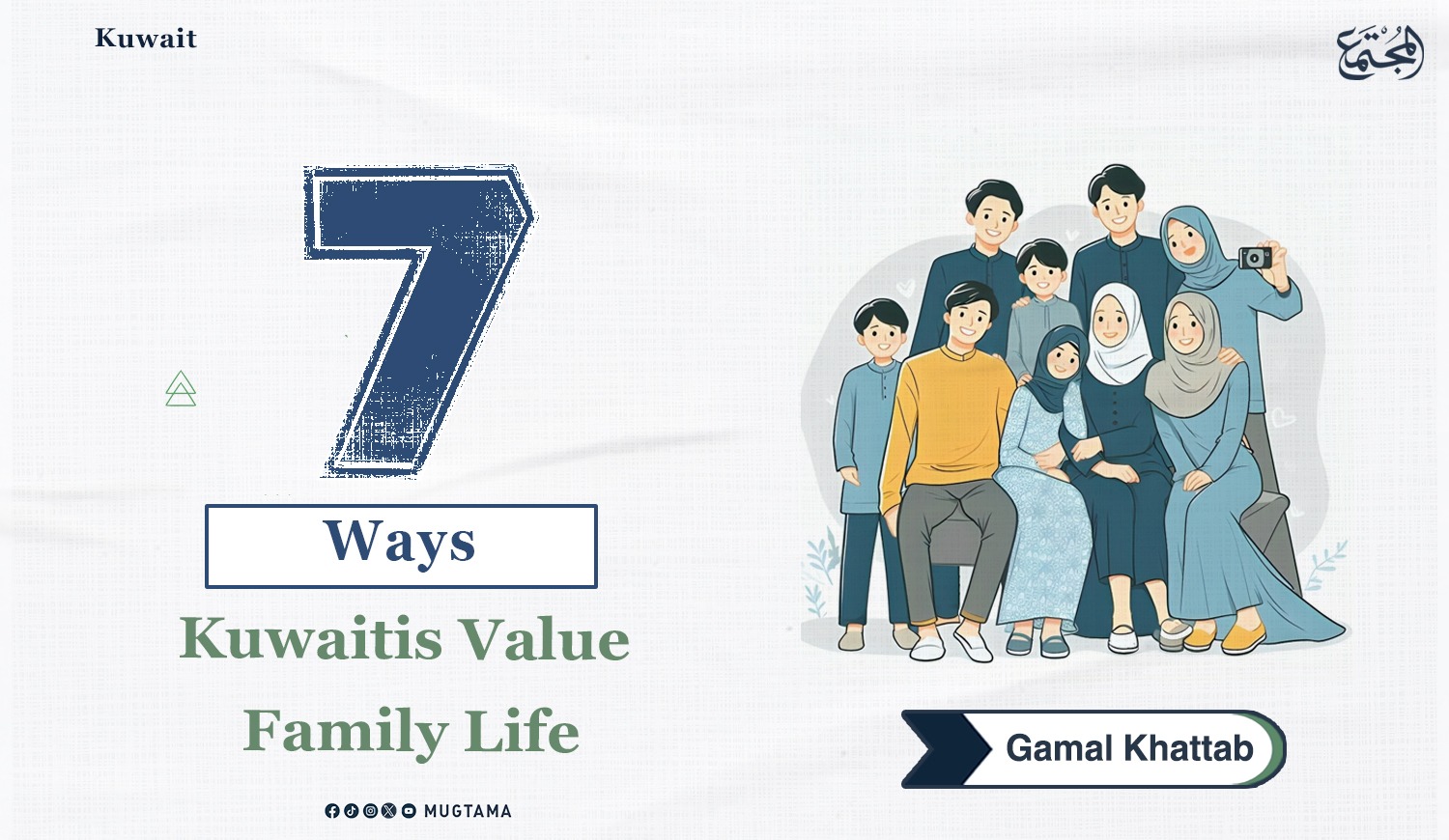
Family life in Kuwait is the cornerstone of social cohesion, political stability, and economic strength. Rooted in the teachings of Islam and enriched by centuries of cultural practice, Kuwaiti families embody noble human and Islamic values that reinforce individual identity and collective well-being.
Below are seven principal ways in which Kuwaitis value
family life, each reflecting a blend of timeless Islamic traditions and
contemporary social dynamics:
1. Respect for Elders
Respecting elders is a deeply rooted Islamic and social
value in Kuwaiti society. Allah says: {And We
have enjoined upon man [care] for his parents. His mother carried him,
[increasing her] in weakness upon weakness, and his weaning is in two years. Be
grateful to Me and to your parents; to Me is the [final] destination.}
[Luqman 31:14]
In Kuwait, elders are
regarded as symbols of wisdom and guardians of tradition. Their guidance
influences family decisions, from marriage arrangements to business ventures.
Politically, this respect reinforces hierarchical leadership structures, while
economically, it ensures continuity in family enterprises, where elders often
serve as trusted advisors.
2. Friday Gatherings (Zuwara)
The Zuwara, or Friday
family gathering, is a cherished Kuwaiti tradition where extended
families meet after Jumu‘ah prayers. These gatherings strengthen kinship ties,
inspired by the Qur’anic command: {O humanity!
Be mindful of your Lord, Who created you from a single soul, and from it He
created its mate, and through both He spread countless men and women. And be
mindful of Allah—in Whose Name you appeal to one another—and honor family ties.
Surely Allah is ever Watchful over you.} [An-Nisa’ 4:1]
Scholars affirm that maintaining family ties (silat
al-rahm) is a duty that brings divine blessings. Socially, Zuwara fosters
intergenerational unity. Politically, it serves as informal forums for
discussing community issues. Economically, it redistributes wealth through
shared meals and gifts, embodying the Islamic principle of generosity.
3. Trips to the Desert and Coast
Kuwait’s
geography—its Arabian Gulf coastline and vast desert
hinterlands—provides families with natural spaces for leisure. Weekends are
often spent camping in the desert or enjoying seaside picnics.
These outings strengthen family bonds by removing the
distractions of urban life. Economically, they support Kuwait’s investment in
tourism infrastructure. Politically and culturally, they highlight Kuwait’s
commitment to preserving heritage while modernizing recreational spaces.
4. Diwaniya
The Diwaniya
is a hallmark of Kuwaiti social life, recognized by UNESCO as intangible
cultural heritage. It is a reception space where men—and women in their own
Diwaniyas—gather to discuss family, politics, and economics. Historically, the
Diwaniya served as a proto-parliament, shaping Kuwait’s democratic traditions.
It reflects the Qur’anic principle of consultation (shura):
{Those who have responded to their master,
established prayer, and whose affairs are [determined] by consultation among
themselves, and who spend from what We have provided for them.}
[Ash-Shura 42:38]
Economically, Diwaniyas function as networking hubs where
business partnerships are forged. Politically, they reinforce Kuwait’s
participatory culture, bridging family and civic life.
5. Banquets and Hospitality
Banquets—whether for weddings, births, or religious
occasions—symbolize generosity. The Prophet Muhammad (PBUH) said: “He who believes in Allah and the Last Day should honor
his guest.” (Sahih
al-Bukhari)
Such events strengthen family ties and community
solidarity. Economically, they support local industries such as catering and
farming. Politically, they serve as platforms for leaders to connect with
citizens, reinforcing Kuwait’s tradition of accessible governance.
6. Gargee’an
Gargee’an
is a mid-Ramadan celebration where children wear traditional clothes, sing
songs, and receive sweets from neighbors. It is a joyful occasion that
strengthens community bonds and spreads happiness among young and old alike.
Though not a religious obligation, Gargee’an aligns with
Islamic values of joy, charity, and neighborly love. Socially, it teaches
children the importance of community solidarity. Economically, it boosts local
markets for sweets and clothing. Politically and culturally, it reflects
Kuwait’s emphasis on preserving national identity.
7. Ghabga (Late-Night Ramadan Meal)
During Ramadan, Kuwaiti
families gather for Ghabga, a late-night meal between iftar and
suhoor. This tradition emphasizes togetherness during the holy month.
Economically, Ghabga supports restaurants and catering
businesses. Socially, it strengthens ties among relatives and friends.
Politically, it underscores Kuwait’s commitment to religious and cultural
expression, as public institutions often host Ghabga events to foster unity.
Respect for elders, Zuwara, desert and coastal trips,
Diwaniya, banquets, Gargee’an, and Ghabga are not merely cultural practices.
They are living embodiments of Islamic values that reinforce social solidarity,
political participation, and economic resilience. By grounding family life in
Qur’anic injunctions, Prophetic guidance, and scholarly wisdom, Kuwait ensures
that its families remain the bedrock of society in an era of rapid change.