





Fasting in the Islamic Civilizational Framework

Ramadan comes to reform the human being
capable of carrying the civilizational values of the Islamic path—without which
the Ummah loses its historical vitality. This comprehensive educational reform
extends over sufficient time and embraces spiritual, moral, and social
dimensions. At its core lies piety, the central value around which fasting
legislation revolves, serving as the civilizational regulator of both
individual and collective behavior. Self-accountability becomes the
prerequisite for civilizational action, for no stable human order can be built
without individuals who monitor themselves before being monitored by laws.
Fasting is practical training for liberating
the human being from the bondage of instinct—a destructive bondage that leads
to injustice and corruption. Fasting is not suppression; rather, it is the
regulation of human energy in service of civilizational purposes. The truly
free person is the one who holds the reins of the self, leading it instead of
being led by it, who perceives their goal and rises to it, unhindered by
desires and impulses.
Fasting achieves a balanced civilizational
structure between individuality and community, as the individual carries
responsibility toward society and strives to ensure its welfare. The Prophet
(peace be upon him) said: 'He does not believe in me who goes to bed full while
his neighbor beside him is hungry and he knows it' (reported by Ibn Abi Shaybah
and al-Tabarani). Ibn Umar (may Allah be pleased with them both) used to take
his food outside his house so that he could break his fast each day with the poor.
There is no good in a nation that places its
wealth in the hands of a privileged few while leaving the majority hungry. In
such a society, resentment grows, the whispers of corruption multiply, and
social peace collapses—peace being a prerequisite for the continuity of
civilizations. The Prophet (peace be upon him) said: 'How can God sanctify a
nation that does not take the rights of its weak from its strong?
Social responsibility does not stop at food
and sustenance; it is comprehensive and essential. The Prophet (peace be upon
him) said: 'Whoever does not abandon false speech and acting upon it, God has
no need for him to abandon his food and drink' (reported by al-Bukhari). He
also said: 'There are many who fast but gain nothing from their fasting except
hunger, and many who pray at night but gain nothing from their prayer except
sleeplessness' (reported by Ibn Majah). Jabir ibn Abdullah (may Allah be pleased
with him) said: 'When you fast, let your hearing, your sight, and your tongue
fast from lying and sins.
Individual responsibility toward society
extends to encompass the entire Ummah, and even the world. As Rabi‘ ibn ‘Amir
said: 'We are a people whom God has sent to bring whomever He wills from the
worship of servants to the worship of the Lord of servants, from the injustice
of religions to the justice of Islam, and from the narrowness of this world to
the vastness of this world and the Hereafter.
The obligation of fasting brings Islamic
unity into the circle of awareness, as the entire Ummah fasts according to one
law, pursuing a consistent purpose. In this way, the call of faith is renewed
each year through various legislations, affirming the universal Islamic
brotherhood—no matter how oppressors attempt to divide it or break its bonds.
God Almighty said: (The believers are brothers)
(Al-Hujurat:10) And he said (This community of yours is one- and
I am your Lord: be mindful of Me) (Al-Mu'minun:52)
At the heart of civilization lies the
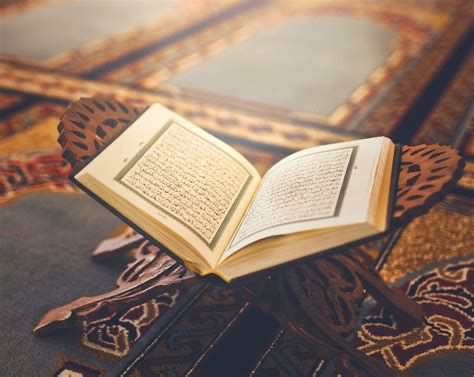
centrality of divine revelation. Fasting in Ramadan was ordained as a tribute
to the month in which revelation descended, as the Almighty declared: (It was in the month of Ramadan that the Quran was revealed as
guidance for mankind, clear messages giving guidance and distinguishing between
right and wrong. So any one of you who is present that month should fast) (Al-Baqarah:185)
Gabriel
would review the Qur’an with the Prophet (peace be upon him) every night of
Ramadan. In the year of his passing, he reviewed it with him twice. Without
doubt, reciting the Qur’an with reflection reshapes the human being anew,
reorders priorities and concerns, and places one at the heart of the
civilizational movement and struggle described by the Qur’an.
The value
of time and its awareness lie at the core of achievement and work. Muslims
become most conscious of it during Ramadan, as they fast upon sighting the
crescent and break their fast upon sighting it, carefully observing the hours
and days of fasting and breaking fast. In doing so, they recall a noble
heritage of ancestors who deeply understood the worth of time.
Ibn
Mas‘ud (may Allah be pleased with him) said: 'I have never regretted anything
more than a day whose sun has set, my lifespan decreased, yet my deeds did not
increase.' Umar ibn Abd al-Aziz (may Allah be pleased with him) said: 'The
night and day work upon you, so work within them.' Al-Hasan al-Basri said: 'I
met people who were more careful with their time than you are with your dirhams
and dinars.' It is no wonder, then, that the month of Ramadan was filled with
decisive victories such as Badr, the Conquest of Mecca, the opening of Al-Andalus, and the
Battle of Manzikert, among others.
Fasting and Its Intended Civilizational Values
The
decline of the Islamic project has left its mark on the transformation of
values, stripping them of meaning, motivation, and function, while the Western
model—its civilizational antithesis—has prevailed. Here, piety and
self-accountability, the intended fruit of fasting, stand against moral
relativism, material interest, consumerist excess, and economic greed that
justified aggression, colonialism, and the oppression of the weak. Here, the
discipline of desires and human liberation from them confronts submission to
pleasure and enslavement to impulses, with their consequences of family
breakdown and psychological crises. Here, the values of social solidarity and
public responsibility oppose individualism, the manipulation of laws to
legitimize moral decay, nihilism, and the loss of purpose—culminating in the
pursuit of escape from life itself when stripped of material utility.
In this
context, fiduciary ethics—as described by Dr. Taha Abdurrahman, where man is
entrusted with himself and the world—stand against contractual ethics, where
man is bound only before the law. The Muslim, with the aspirations of his
spirit, the needs of his disciplined body, and the visions of his conscious
mind, stands opposite the Western human reduced to matter, utility, and
pleasure, as described by Dr. Abdel Wahab El-Messiri
You may
also like:
Western Testimonies on Ramadan and Fasting
5 Golden Benefits of Ramadan for the Muslim Family