




Features of the New Islamic Discourse
Some tend to
portray Islamic discourse as a monolithic, single-dimensional discourse. Islam
is, without doubt, a religion centered on the doctrine of monotheism; however,
monotheism does not imply uniformity. Rather, it affirms that Allah, the One,
is distinct from humanity and the universe, transcendent above both. This means
that absolute oneness belongs to Allah alone, while everything else is multiple
and diverse. Islamic discourse, therefore, is not the speech of Allah itself,
but rather the intellectual efforts of Muslims within specific times and
places. As such, it is also plural and varied, and the history of Muslims is an
expression of this plurality and diversity.
We tend to
classify the levels of Islamic discourse as follows:
An Islamic
discourse that emerged with the advent of colonialism in the Muslim world,
attempting to provide an Islamic response to the phenomena of modernization and
colonialism. This discourse remained dominant until the mid-1960s and is
referred to here as the “old Islamic discourse.”
Another
discourse then appeared, initially marginal, but its features gradually became
clearer in the mid-1960s. This is what we call the “new Islamic discourse.” The
key point of divergence between the two lies in their stance toward Western
modernity (as will be explained later). In addition to this historical binary
classification, it is also useful to propose a threefold classification based
on the agents carrying the discourse:
The Popular
or Mass (appeal-based) Discourse
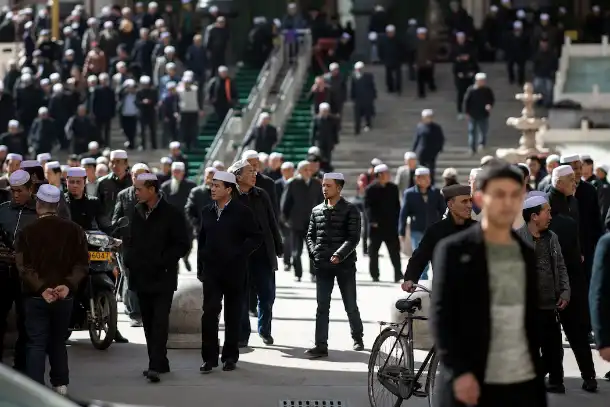
This is the
discourse of the broad base of Muslim masses who, through their innate
disposition, sensed that the processes of modernization, secularization, and
globalization did not bring goodness or reform to the Ummah. They recognized
that these processes were, at their core, forms of Westernization that stripped
them of their religious and cultural heritage without offering anything
meaningful in return. Instead, they led to greater colonial dominance and
internal class polarization. These masses attempt to hold firmly to Islam—they
know it well—and retreat into it while awaiting relief from Allah. They act
through their inherited Islamic framework while simultaneously appealing for
rescue. However, they do not produce structured thought or organized political
movements. This discourse is often expressed through spontaneous, emotional
outbursts against extreme Westernization and colonial intrusion, and at other
times through individual charitable acts (such as giving alms) or social
initiatives (such as establishing mosques, hospitals, schools, and charity
tables during Ramadan, etc.). Occasionally, it may also manifest in acts of
protest violence. This popular discourse primarily includes the poor, but also
encompasses wealthy individuals who recognize the importance of religious and
civilizational heritage and understand that its loss would mean the loss of
everything.
The Political
Discourse
This discourse
is carried by segments of the middle class—professionals, academics, university
students, and merchants—who also felt the need for Islamic action to protect
the Ummah. They realized that political engagement was the path toward this
goal, and thus organized themselves into political groups that generally avoid
violence, supported by youth organizations and educational institutions. Some
proponents of this discourse have tended toward seeking power through force.
However, after 1965 (as will be explained later), there has been a general
trend toward working through existing legitimate channels. The focus of this
discourse is largely confined to the political and educational spheres.
The Intellectual
Discourse
This is the
discourse primarily concerned with the theoretical and intellectual dimensions
within the Islamic movement.
This
classification does not imply a complete separation between the three levels of
discourse. The popular and political discourses overlap, as do the political
and intellectual ones. Although the popular discourse appears more distant from
the intellectual, interaction between them occurs through the political
discourse. Thus, despite affirming the fundamental unity among these three
levels, it remains analytically useful to consider them as relatively distinct
from one another.
Read Also:
-
Youth and Contemporary Religious Discourse
-
Human Development as an Approach to Religious Discourse
-
Uniqueness of the Quranic Discourse
-
Renewing Religious Discourse: A Religious Necessity and a Secular 'Trap'!
-------------------------------------------------------------