


Strategic & Humanitarian Monitoring Report
Indian Sub-cont. in a Week (April 15–22, 2026)

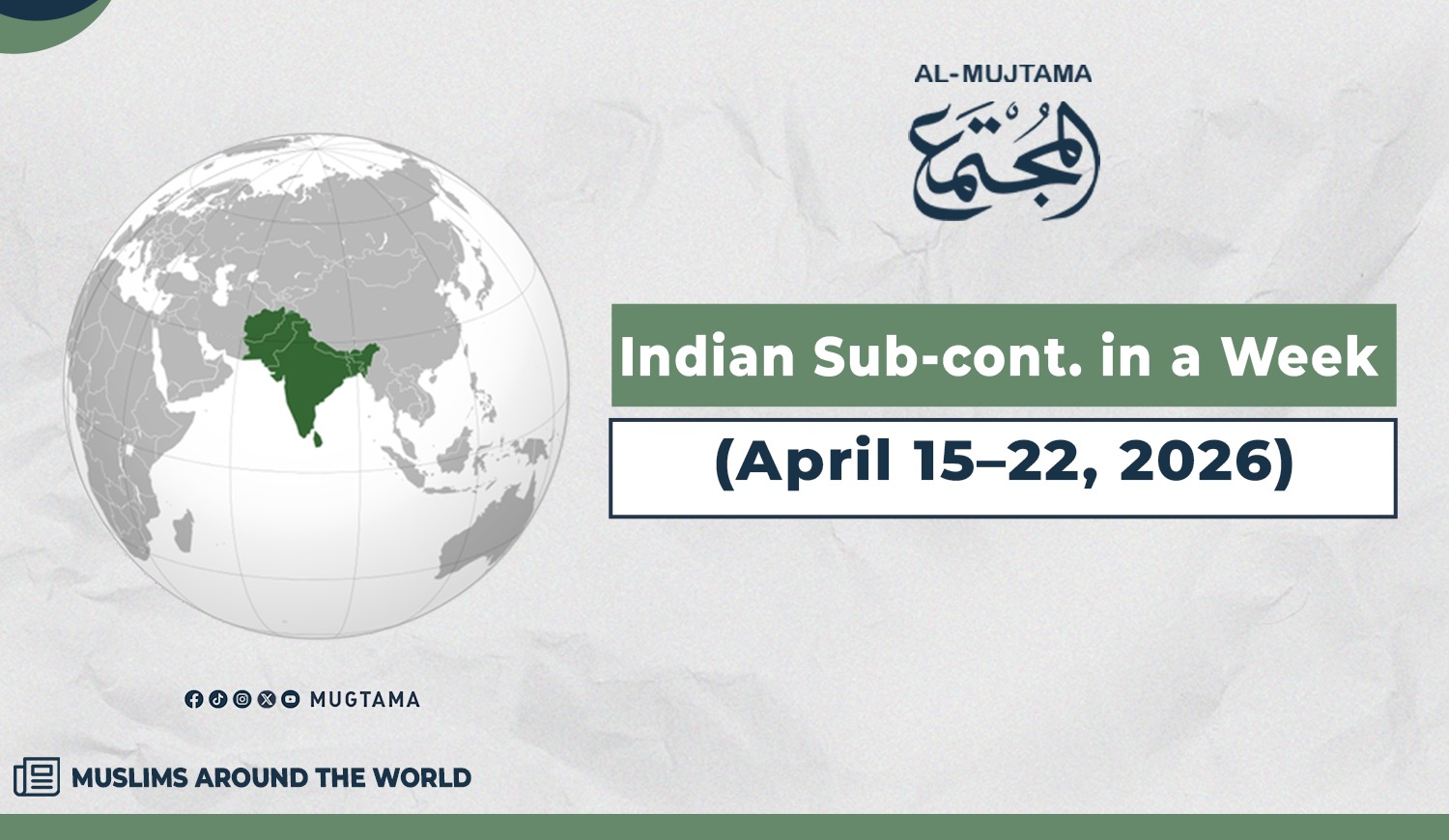
The third week of April 2026 has witnessed a dramatic intensification of communal and administrative friction within India, contrasted by a surprising diplomatic resurgence for Pakistan. While India grapples with the fallout of controversial "bulldozer justice" and electoral disenfranchisement, Pakistan has positioned itself as a critical bridge between Western interests and Middle Eastern stability. Meanwhile, neighboring states like Bangladesh, Sri Lanka, and Nepal are navigating their own paths toward economic recovery and political reform, often under the shadow of these two regional giants.
India: Internal Fractures and Administrative Overreach
Communal Paranoia and Identity-Based Violence
In the national capital, Delhi,
a chilling incident occurred on April 17, 2026, when a Hindu man wasbrutally assaulted after being mistaken for a Muslim. This event serves as
a stark indicator of the high levels of communal paranoia currently gripping
the country. Eyewitness reports suggest that a mob confronted the individual,
and despite his attempts to clarify his identity, the assault continued—highlighting
a "shoot first, ask later" mentality in the context of religious
identity.
Further East, in Patna,
the educational sanctity was violated when a Muslim student was assaulted and threatened with death. The victim was reportedly targeted with
derogatory religious slurs, a trend that sociologists warn is becoming
normalized in northern Indian states. Simultaneously, in Lucknow, the
discovery of a hidden video of a Muslim woman sparked a firestorm of
online hate. Rather than being treated as a criminal privacy violation, the
video was weaponized by digital trolls to promote Islamophobic narratives,
illustrating how technology is being used to facilitate communal harassment.
The "Bulldozer Drive" in Uttar Pradesh
Between April 16 and 18, 2026,
the administration in Uttar Pradesh (UP) escalated its controversial
demolition policy. In Sambhal district, authorities razed a Mosque, an
Eidgah, and an Imambara.
- Official Rationale: The District Magistrate
claimed the structures were built on government "land banks,"
manure pits, or grazing land.
- Discrimination Concerns: Human rights organizations
noted that the demolitions were carried out under heavy police presence
with little to no notice. Residents pointed out that similar encroachments
by other religious groups remain untouched, reinforcing the perception of
a targeted campaign against Muslim religious infrastructure.
The West Bengal Electoral Crisis
As the state moves toward its
2026 elections, reports from The Guardian and local observers have
raised alarms regarding the exclusion of Muslim voters. Approximately 9
million names have reportedly been purged from electoral rolls under the
guise of removing "illegal immigrants." In a state where the minority
vote is a deciding factor, this move is seen by the opposition as a
"bloodless coup" to ensure a specific electoral outcome.
Economic Unrest: The Noida Protests
In the industrial hub of Noida,
the week saw violent clashes between workers and security forces. On April
20, thousands of workers, struggling under the weight of inflation (CPI
hovering near 7%) and stagnant wages, took to the streets. The protests
turned violent as demonstrators faced tear gas and lathi charges, highlighting
the growing disconnect between India's macroeconomic growth figures and the
ground reality of its labor force.
Pakistan: Diplomatic Progress and the "Trust Deficit"
The US-Pakistan-India Realignment
A landmark report published on April
19, 2026, highlighted a significant shift in regional power dynamics.
According to the report, US trust in India is declining as New Delhi
focuses inward on divisive domestic policies and maintains its "strategic
autonomy" regarding Russia.
In contrast, Pakistan's
diplomatic standing has surged. Islamabad has emerged as the publicly
acknowledged mediator between Washington and Tehran. Host to the "second
phase of peace talks," Pakistan is leveraging its unique security ties
with the US and its neighborly relations with Iran to prevent a wider Middle
Eastern conflict. This "proactive diplomacy" has led to a
recalibration in Washington, where Pakistan is once again seen as an
indispensable security partner.
The Kashmir Issue: Protests in Lahore
Domestic sentiment in Pakistan
remains tethered to the situation in Kashmir. Large-scale protests in Lahore
on April 17 condemned the life sentence handed to Kashmiri leader Aasiya
Andrabi and her associates, Fehmeeda Sofi and Nahida Nasreen. The Pakistan
Ministry of Foreign Affairs (MOFA) issued a stern statement labeling the
judicial process in Delhi as a "grave miscarriage of justice,"
keeping the IIOJK issue at the forefront of the regional agenda.
Jammu & Kashmir (IIOJK): Intensification of Control
The security landscape in IIOJK
has tightened significantly during this reporting period:
- Property Seizures in Pulwama: Under the pretext of
counter-terrorism, authorities have begun the summary seizure of
residential properties. In Pulwama, the homes of individuals accused of
providing logistics to dissenters were confiscated, leaving families
homeless without a final court verdict.
- Search Operations: Reports indicate a 25%
increase in Cordon and Search Operations (CASO) across the valley this
week.
- The Ramban Incident: Protests continued
following the death of a Muslim youth in Ramban, which locals
allege was a case of extrajudicial killing. The resulting curfew and
internet shutdowns have further isolated the region.
Bangladesh: The Path to the 2026 General Election
Under the interim leadership of Muhammad
Yunus, Bangladesh is currently in a state of deep transition.
- The Election Roadmap: This week, political
parties like the BNP and Jamaat-e-Islami intensified their
grassroots activities after Yunus hinted at a 2026 election date.
- Institutional Purge: The government continues to
dismantle the influence of the former Awami League administration, with
special tribunals investigating the "crimes against humanity"
committed during the 2024 student uprising.
- Economic Stability: Bangladesh is currently
negotiating a $4.7 billion loan tranche from the IMF, with this
week's discussions focusing on banking sector reforms and the recovery of
laundered assets.
Sri Lanka & The Maldives: Economic Recovery and Sovereignty
Sri Lanka
Sri Lanka is showing signs of
fragile stability. On April 18, the government announced a new framework
for debt restructuring with private bondholders. However, in the
Northern Province, ethnic tensions remain high as Tamil groups protest against
land acquisitions by the state, which they claim is a form of "demographic
engineering."
The Maldives
President Mohamed Muizzu’s
administration continues its "Maldives First" policy. This week, the
Maldives signed new maritime agreements with Turkey, further distancing itself
from its traditional security reliance on India. This shift is a direct
response to the perceived "big brother" attitude of New Delhi,
reflecting a broader trend of South Asian smaller states seeking alternative
security partners.
Nepal and Bhutan: Administrative Modernization and Sustainable Urbanism
Nepal
Nepal is facing a period of
administrative overhaul. On April 20, the government introduced a 9-point
reform plan to digitize citizen services and reduce corruption in the
passport and ID offices. However, the ruling coalition remains fragile, with
internal bickering over the 2026 budget allocation causing delays in
infrastructure projects.
Bhutan
Bhutan is making a bold play for
the global stage with its "Gelephu Mindfulness City." This
week, the King of Bhutan met with international investors to discuss the city’s
role as a carbon-neutral economic hub, positioning the kingdom as a unique
alternative to the industrialized models of its neighbors.
Afghanistan: Strategic Realignment and the Durand Line Conflict
The situation in Afghanistan
during the week of April 15–22, 2026, remains a volatile mix of frontier
warfare and high-stakes resource diplomacy. The border region along the Durand
Line witnessed a significant escalation in military friction; specifically, on
April 16, heavy clashes erupted in the Spin Boldak district between Afghanistan
border guards and Pakistani security forces. These skirmishes, which reportedly
involved the exchange of mortar fire and heavy machine guns, have paralyzed
vital trade arteries, exacerbating the humanitarian crisis for local
populations who rely on cross-border movement for food, medical supplies, and
basic commerce.
While the western border remains
a flashpoint of kinetic conflict, the diplomatic atmosphere in Kabul tells a
different story—one of strategic economic pivoting. This week, a high-level
Chinese delegation arrived in the capital to finalize long-stalled negotiations
regarding copper mining rights, specifically targeting the Mes Aynak deposits,
one of the world's largest untapped copper reserves. This visit is a
cornerstone of Afghanistan’s shift toward Eastern economic alliances. By
engaging with Beijing, the Afghan administration is effectively bypassing
Western financial sanctions and the freezing of central bank assets. For China,
securing these mineral rights is a vital component of its "Belt and Road
Initiative" (BRI), ensuring a steady supply of raw materials for its green
energy transition. For Afghanistan, this partnership represents a survival
strategy, transforming Afghanistan from a sanctioned pariah state into a
crucial node in the emerging Eurasian resource corridor. This dual reality—military
tension with its immediate neighbor and economic integration with a global
superpower—defines the current Afghan geopolitical paradox.
The events of the third week of April 2026 reveal a profound paradox. India, historically seen as the region’s democratic anchor, is currently grappling with internal crises that threaten its social cohesion and international reputation. Conversely, Pakistan, often plagued by instability, has managed to carve out a vital role in global diplomacy. For the smaller nations of the subcontinent, the strategy has shifted toward diversification—seeking multiple partners (China, Turkey, USA) to balance the overwhelming and sometimes intrusive influence of the region's two nuclear powers. As the month draws to a close, the focus remains on whether India can stabilize its internal communal tensions or if the current "bulldozer" and "purification" policies will lead to lasting regional fractures.
Sources:
- The Guardian (International Edition)
- Asia Times / Iran International
- Kashmir Media Service (KMS)
- The Hindu / Frontline
- Al Jazeera English
- Reuters