








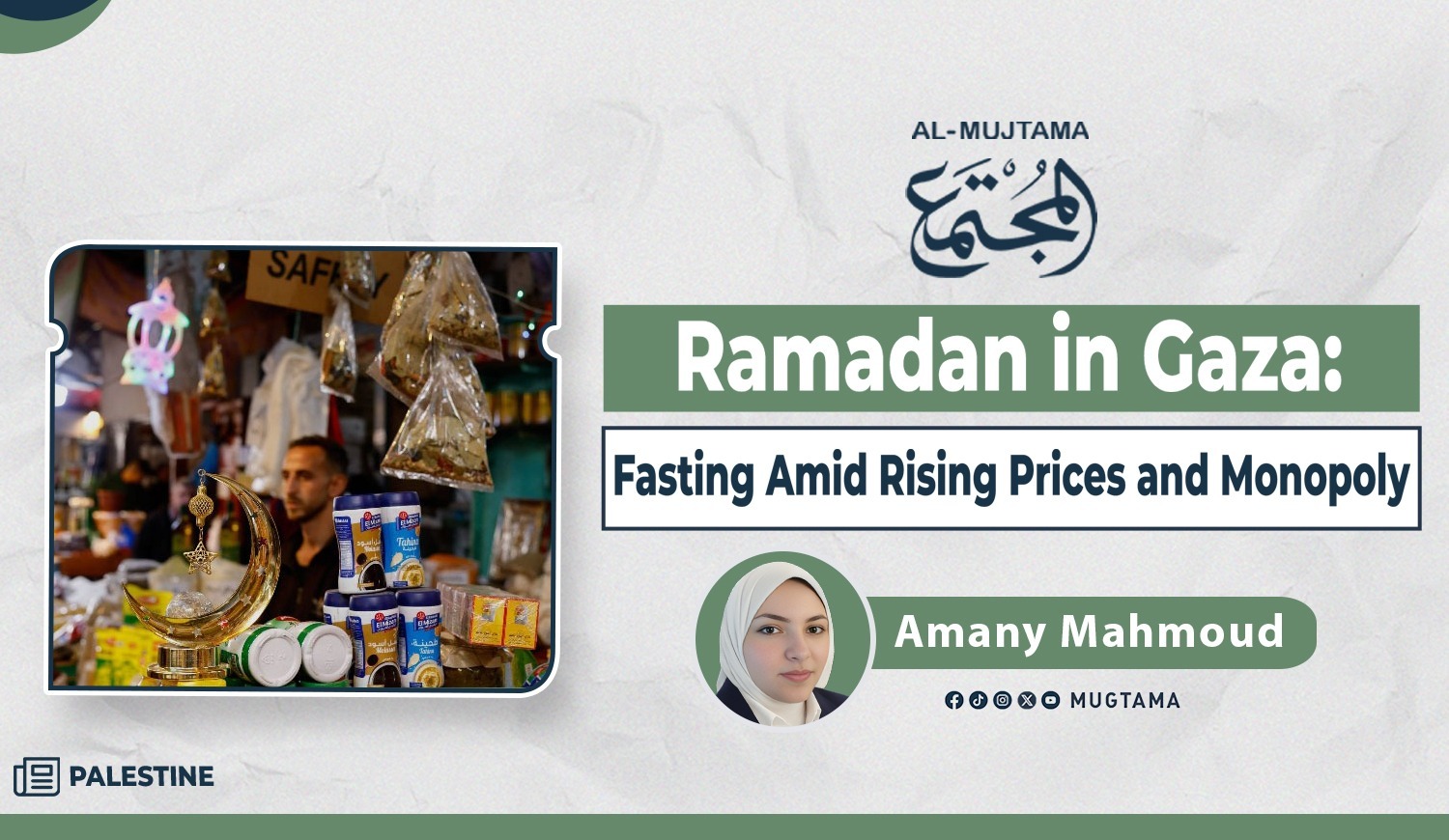
Ramadan in Gaza: Fasting Amid Rising Prices and Monopoly

As the
holy month of Ramadan begins, food prices in Gaza have suddenly surged, leaving
citizens struggling to secure their daily bread—especially during a time when
needs double compared to ordinary days.
Monopoly and the Erosion of Purchasing Power
In Gaza, countless families are unable to
meet their basic needs due to dire living conditions. Thousands of workers have
lost their jobs because of the war, unemployment has soared, and household
incomes have sharply declined. This harsh reality forces many citizens to wait
for charitable aid parcels that barely cover their needs.
Prices of essential goods such as flour, oil,
vegetables, and meat have risen dramatically. Despite the abundance of food
supplies in Gaza’s markets during Ramadan, the surge is driven by large traders
seeking to monopolize goods amid chaos and the absence of oversight.
Falling incomes represent one of the most
dangerous aspects of the economic crisis, as jobs shift from being a source of
stability to a psychological and financial burden. The situation worsens as
many struggle to access humanitarian aid, which is often mismanaged, with large
portions sold in markets—leaving wide segments of the population unable to
afford them.
Since the outbreak of war and the
deterioration of living and humanitarian conditions, many have come to rely on
charitable aid and community kitchens for food. Daily needs continue to grow,
hunger levels are rising, and long queues for food parcels or a single meal
have become a defining image of survival in Gaza.
Voices from Gaza: Stories of Deprivation
Social activist Khalil Baloosha explained
that with the arrival of Ramadan, the need for basic food assistance in Gaza
has grown significantly, especially among the poor. Consumption of these
essentials rises sharply compared to ordinary days, yet citizens face even
greater demand now as prices soar despite the abundance of goods in the
markets.
Speaking to Al-Mujtama‘, he stressed
that this surge in prices places additional pressure on families already
exhausted by economic hardship. The absence of government oversight, the spread
of black-market practices, and the instability caused by widespread chaos have
encouraged traders to monopolize goods. As a result, items are sold at prices
far above their normal value, deepening the suffering of Palestinians whose
purchasing power has collapsed.
He pointed out that rising prices, the loss
of job opportunities, and the deteriorating economy have stripped families of
the ability to meet their basic food needs from the markets. This forces them
to wait or turn to charitable aid centers for support. The ongoing blockade and
the insufficient entry of aid have directly contributed to the surge in prices.
In one of the queues outside a community
kitchen in Sheikh Radwan neighborhood, west of Gaza City, dozens of men—both
young and elderly—stand waiting for their turn to scoop a small portion of food
into the pots they brought from home.
Citizen Abu Al-Abed shared his story: ‘I used
to work in a factory producing building materials, earning a salary that was
enough to cover my family’s needs. But since the war began, I lost my job, and
just days after the outbreak, the factory was bombed and completely destroyed
by the occupation, depriving all workers of the chance to live in safety and
stability.
Speaking to Al-Mujtama‘, he explained
that the factory employed a large number of workers, each supporting a family
and in need of steady work to meet their basic needs. Yet after two and a half
years of war, his living conditions have deteriorated drastically. ‘Now I
search for aid distribution centers and line up daily at the community kitchen
to secure food and protect my children from starving,’ he said.
He noted that the majority of citizens in
Gaza enter Ramadan under extremely difficult circumstances, especially those
without a source of income who rely on aid. They complain of sharp increases in
market prices, alongside the troubling practice of selling aid supplies in
markets, depriving the poor of access and forcing them to buy at inflated
costs.
He added that there are basic daily needs
that residents of Gaza cannot do without, which before the war were affordable.
Chief among them is bread, as nearly all Gazans depend on buying bread daily.
Some receive it from charitable organizations, since preparing bread at home is
difficult due to the lack of resources. Access to drinking water has also
become a major obstacle, with the price of water gallons rising steeply.
Amid this harsh reality, citizen Abu Al-Abed
hopes to receive aid parcels containing sufficient food supplies during
Ramadan, a month when the demand for essentials rises sharply. He stressed the
need for field monitoring in the markets by relevant authorities to regulate
prices and hold accountable those exploiting citizens’ needs.
Despite the severe conditions, families in
Gaza cling to hope that Ramadan will bring some relief to their suffering. They
look forward to intensified support campaigns, the distribution of food
parcels, and cash assistance—hoping to draw smiles on the faces of residents
worn down by war and the hardships of daily life.
You may also like:
Recruitment in Gaza: Administrative Void or Security Readiness
Gaza’s Third Ramadan… The First After ‘Al-Aqsa Flood’ Without Eating Tree Leaves!