


Muslims in Taiwan
Training Course for Muslim Imams and Preachers in Taiwan

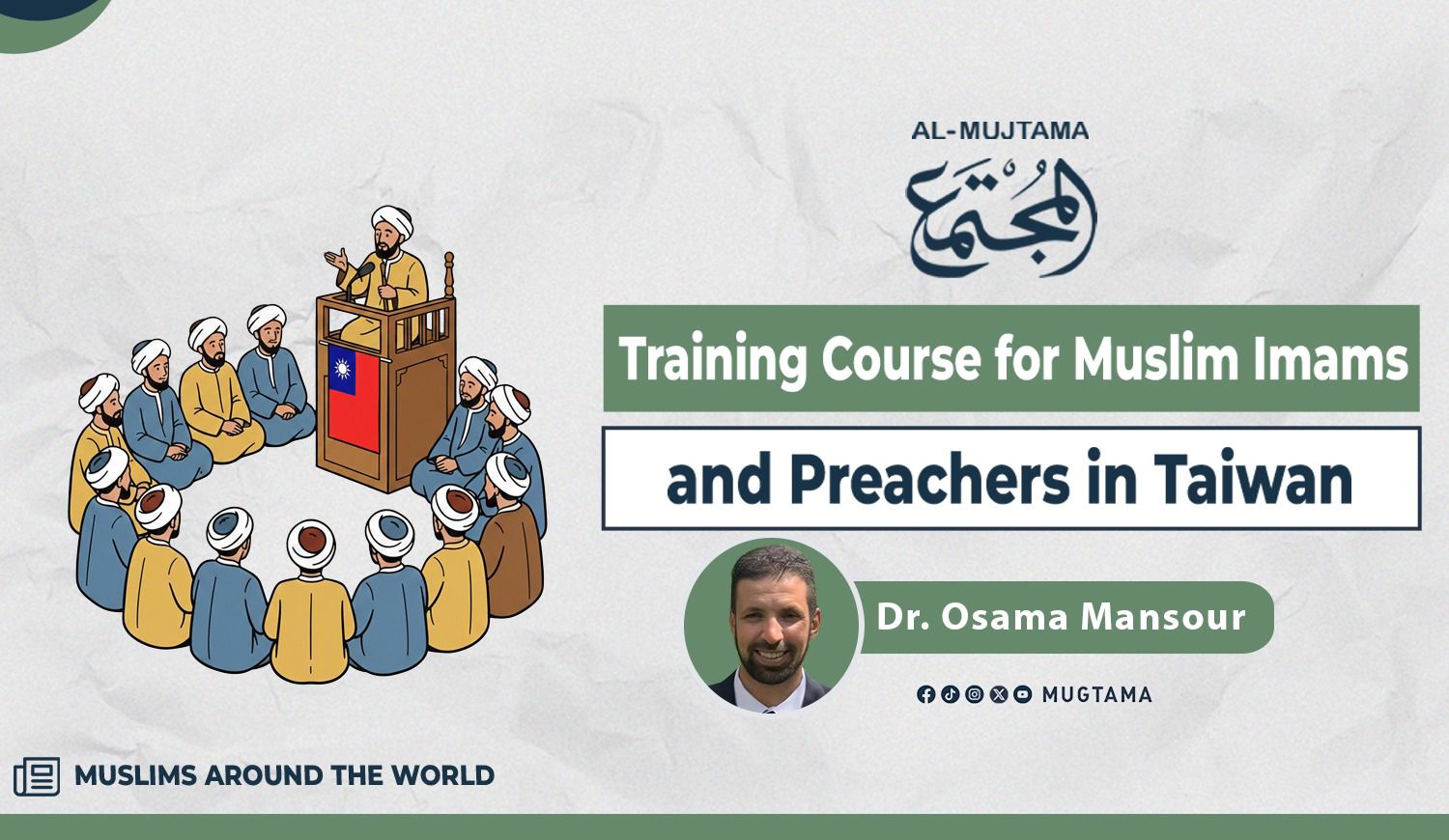
In cooperation with Saudi Arabia’s
Ministry of Islamic Affairs, the Islamic Association in Taiwan organized
a training course for Muslim imams and preachers in Taiwan.
During the last week of January 2026,
the Chinese Islamic Association held a seminar led by Sheikh Mohammed Al‑Shahri,
one of the scholars from the Ministry of Islamic Affairs. The program began on
the first day at Taipei Grand Mosque in the capital, Taipei, and
continued on the second day at Taichung Mosque in the city of Taichung.
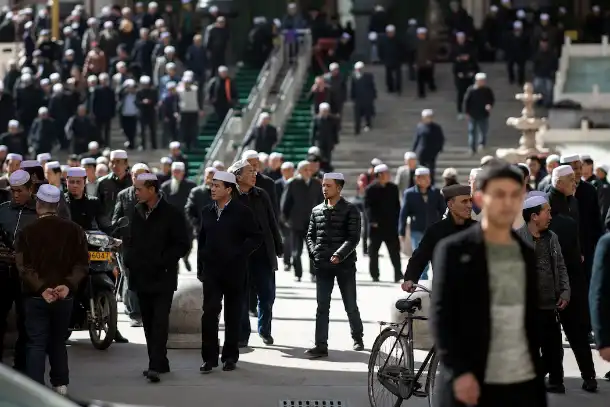
The first day witnessed the attendance
of 80 Islamic figures, including imams, preachers, new Muslims, and those
interested in Islamic affairs in Taiwan. The seminar was moderated by Mr. Yunus
Ma, representing the president of the Islamic Association. Ma, a Taiwanese
Muslim, had previously studied in Saudi Arabia, works at the Ministry of
Foreign Affairs, and is also a member of the Islamic Association.
The first day’s program revolved
around two themes. The first: the concept of moderation in Islam,
including its foundations in the Qur’an and Sunnah, scientific methods to
confront extremism, and the imam’s responsibilities in preaching and guidance.
The second theme: “The Virtue of Knowledge and the Status of Scholars in
Islam,” covering the merit of seeking knowledge, the social role of scholars
and religious leaders, and the importance of spreading beneficial knowledge and
awareness among people.
At the beginning of the seminar,
Sheikh Al‑Shahri said: “We came here based on the words of God Almighty: ‘The
believers are but brothers.’ We saw it as our duty to help our Muslim
brothers in Taiwan understand the laws of Islam, its teachings, and morals,
and to set an example in good character and dealing with non‑Muslims in trade
and daily life—reflecting the good image of Islam. The Prophet (peace be
upon him) said: ‘You will not be able to
satisfy people with your wealth, but you can satisfy them with good character.’
He added: “For any deed to be
accepted, it must conform to the guidance of the Prophet (peace be upon him),
and the intention must be purely for the sake of God. Seeking knowledge,
especially religious knowledge, is essential.”
In this context, Mr. Yusuf Lin, a well‑known
figure in Taiwan interested in Islamic work, said: “The Taiwanese government
respects minorities and grants them considerable freedom, considering Muslims
an important component of society. This gives us great opportunities to hold
such meetings, which are undoubtedly of great importance to Muslims here.”
Lin added: “Our relations with Arab
countries are strong and continue to develop day by day. As Muslims, we
must benefit from this cooperation and harmony to achieve mutual benefit.”
The second day in Taichung witnessed
notable attendance at the city’s famous mosque. The program was divided into
two sessions. The first lecture, “The Role of Imams and Preachers,” addressed
balance and wisdom in religious discourse, approaches to contemporary social
issues, and community participation with non‑Muslim societies. The second
lecture, “Preaching and Oratory Skills in Non‑Muslim Societies,” focused
on methods of da‘wah in non‑Muslim contexts, language and culture, wisdom and
good interaction, and case studies from Taiwan.
The seminar was moderated by Imam Ali
Bao of Taichung Mosque. The event saw active interaction, with participants
raising important questions answered clearly by Sheikh Al‑Shahri. Among them, a
young imam asked about the obligation of jihad: “Does jihad still exist today?
Can we still speak about it?”
Sheikh Al‑Shahri replied: “Yes, jihad
is an Islamic obligation, but it is governed by strict regulations. Some
exploit it for political purposes, so caution and clarity are essential when
addressing this matter.”
A new Muslim asked: “As new Muslims,
many aspects of Islam are unclear to us. What should we do?”
The Sheikh advised: “Do not rush.
Learn Islam step by step.”
Another attendee requested an
explanation of Surah Al‑Fatiha, as many Muslims unfamiliar with Arabic struggle
to understand its meanings. Sheikh Al‑Shahri responded by interpreting its
verses, which greatly pleased the audience.
On the sidelines, Imam Ali Bao was
interviewed. Asked about the importance of such seminars, he said: “These
seminars are very beneficial, especially since imams and preachers in Taiwan
urgently need continuous training and discussion of pressing issues concerning
Islam and Muslims here.”
Regarding the short duration of the
training, Bao explained: “Time constraints were the reason, and coordination
for this course was not ideal, in addition to the visiting Sheikh’s other
commitments. But we will improve this in the future, God willing.”
Asked whether the seminar achieved its
purpose, Bao affirmed: “Certainly. Such seminars are extremely positive. We
will work to repeat them in the future, as Muslims in Taiwan urgently
need guidance to learn their religion and be enlightened on the path of truth.
The greatest responsibility lies with imams and preachers.”
------------
Read this article in Arabic