





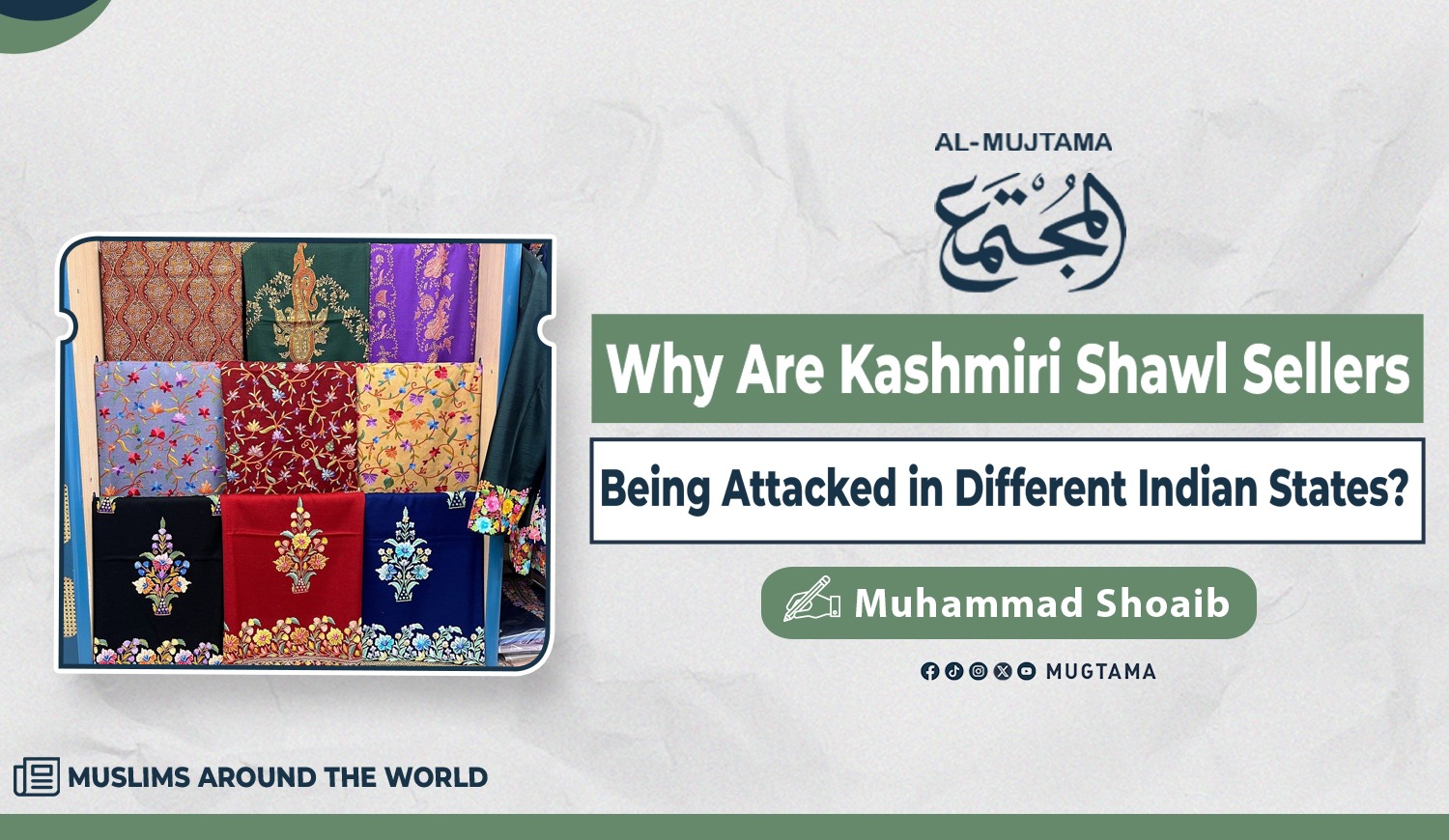
Why Are Kashmiri Shawl Sellers Being Attacked in Different Indian States?
Muslims around the World
In recent times, incidents of
attacks on Kashmiri shawl sellers in various Indian states have been increasing
one after another. As a result, many Kashmiris have been forced to return to
their homeland, while others have adopted new strategies to balance security
and livelihood.
Although some remain due to economic pressure, they are using
WhatsApp groups to warn one another so that no Kashmiri shawl seller becomes a
victim of attacks by Hindutva extremists.
Examples of Violent Attacks
Several examples of such attacks can be mentioned. Tabish
Ahmad was assaulted in Gadarpur, Uttarakhand, where he lost consciousness due
to the attack and his brother Danish was injured.
In another incident, a Kashmiri man named Bilal Ahmad was
attacked by a Hindu group in Kashipur, Uttarakhand, and was forced to chant the
slogan “Bharat Mata Ki Jai.”
In yet another case, Mohammad Ramzan Ramzan was assaulted by
Hindu hawkers, who mockingly accused him of carrying an AK-47 in his bag.
Security Through WhatsApp Networks
Ayaz Ahmad, a 28-year-old young man, sells shawls in Hisab,
Haryana. He runs a WhatsApp group with around two dozen members, where they
alert one another daily about which areas are safe and which should be avoided,
prioritizing security above all.
Economic Pressures After 2019
Kashmiri Muslims travel to other Indian states to earn a
living, but their religion and Kashmiri identity are often viewed with
suspicion. After the Indian central government revoked Kashmir’s partial
autonomy in 2019, economic opportunities shrank and unemployment rose, forcing
many Kashmiris to leave the region in search of livelihoods elsewhere in India.
In those places, however, they have faced extremely violent attacks. Since
2025, nearly 200 incidents have been reported in which Kashmiri traders, students,
and workers were attacked or threatened, compelling many to abandon those areas
and return to Kashmir.
Political Reactions and Lack of Action
Although major political parties in Kashmir have urged the
central government to intervene— including former chief ministers Omar Abdullah
and Mehbooba Mufti, who described the attacks as unacceptable and a form of
political intimidation—no concrete action has followed. Bharatiya Janata Party
spokesperson Altaf Thakur condemned the violence and affirmed that Kashmiris
are an integral part of India, calling the attacks alarming manifestations that
create fear and insecurity among Kashmiris, yet without effective measures from
the central government.
A Community Trapped Between Safety and Livelihood
In short, Kashmiri shawl sellers are trapped in a complex
dilemma between safety and livelihood. Ongoing attacks and threats nationwide
are forcing them to relocate and operate within limited areas, fostering a deep
sense of fear and helplessness within the Kashmiri community.