


8 Developments That Sum Up the Current Situation in Tehran
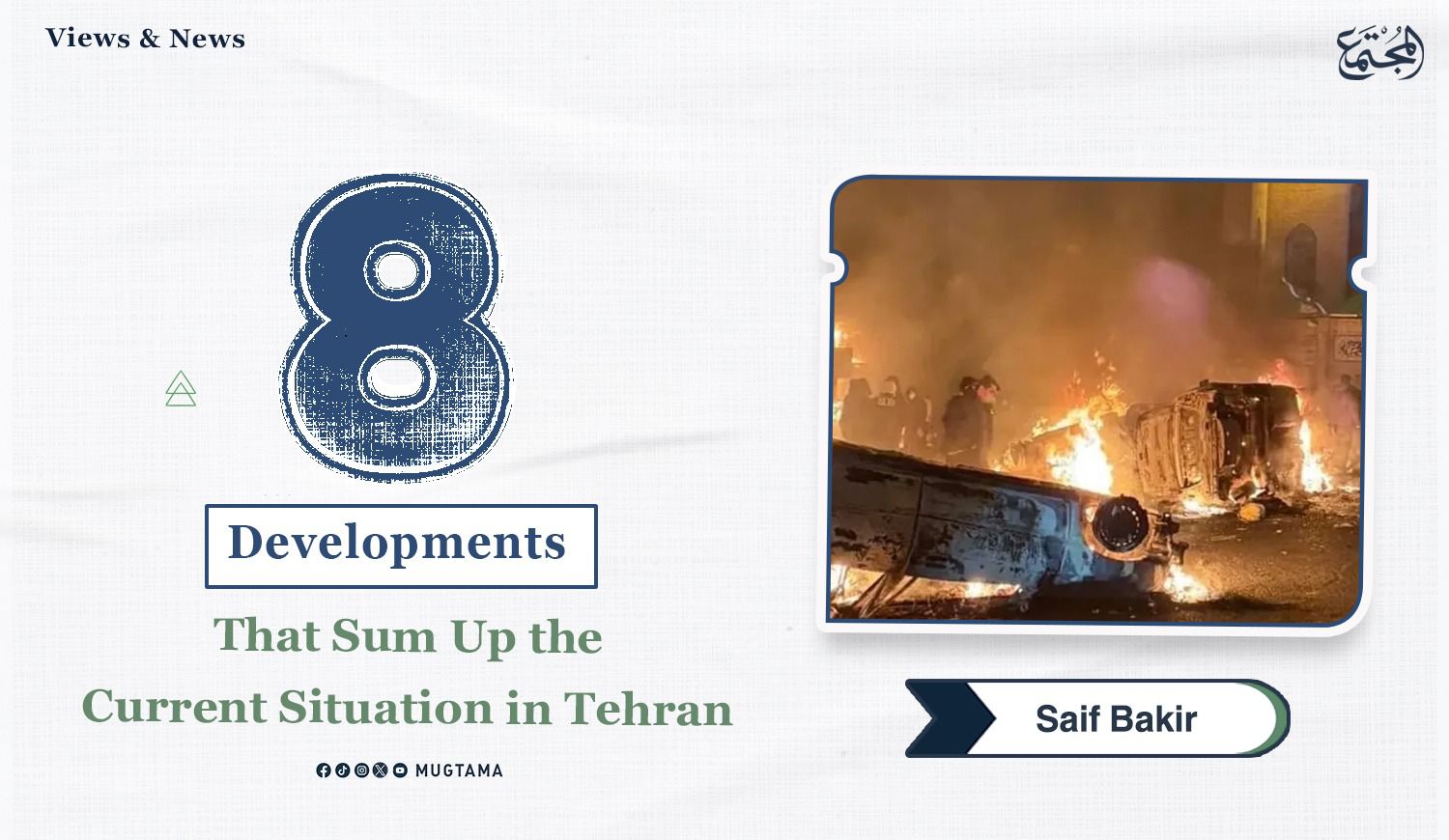
Iran has been witnessing a wave of widespread protests since
late December, driven by a sharp deterioration in living conditions, rising
inflation rates, and the collapse of the local currency.
As the protests spread geographically, security confrontations
intensified amid human rights accusations of excessive use of force, resulting
in large numbers of fatalities and detainees, alongside a widespread internet
shutdown.
These internal developments coincided with an escalation on
the international political front, including UN condemnations and U.S.
warnings, as President Donald Trump signaled multiple options, including
military action—prompting Israel to raise its level of maximum alert.
In response, Tehran issued direct threats, declaring the
United States and Israel legitimate targets in the event of any attack.
The current Iranian landscape reflects an intersection of
economic crisis, political tension, and regional conflict at an extremely
sensitive moment—one that could open the door to scenarios of internal
escalation or a broader regional confrontation, making developments in Iran a
decisive factor in the equations of stability across the Middle East.
This report reviews the key on-the-ground, human rights, and
political developments related to the protests, international reactions, the
prospects of military escalation, and the implications of the situation for
regional security.
1- The On-the-Ground Situation and Developments of the Protests
in Iran:
The protests erupted in Iran on December 28 against the
backdrop of soaring prices and deteriorating living conditions, after the
Iranian rial fell to unprecedented low levels, while inflation reached
approximately 43 percent according to official figures.
The protests quickly expanded to cover several provinces and
major cities, most notably Tehran, Isfahan, Shiraz, Mashhad, Hamedan, Qom,
Ahvaz, and Kermanshah.
According to official media outlets, some cities witnessed
riots that resulted in the deaths of a number of police and security personnel,
while authorities maintain that their forces are working to contain the unrest
and prevent the country from sliding into chaos.
2- The Human Rights Toll and Allegations of Excessive Use of
Force:
Human rights organizations, foremost
among them the Iran Human Rights Organization, reported that the authorities
may have carried out widespread killings during the crackdown on the ongoing
protests.
The organization confirmed that at
least 192 protesters have been killed since the protests began, warning that
the true number of victims could be much higher—possibly reaching into the
hundreds.
In a notable development, the
independent Human Rights Activists News Agency (HRANA) announced that the death
toll from the protests has risen to at least 538 people since they erupted
about two weeks ago.
According to a report by the Human
Rights Activists News Agency, which is based in the United States, the protests
have resulted in the deaths of 490 protesters and 48 members of the security
forces, as the unrest spread across 31 provinces throughout the country.
The report noted that more than 10,600
protesters have been arrested in connection with the demonstrations, amid the
continuation of extensive security operations.
Meanwhile, Iranian authorities have
released no official statements clarifying the numbers of those killed or
injured. The Associated Press reported that it was unable to independently
verify the announced casualty figures.
The security operations were
accompanied by a near-total internet shutdown for more than 60 hours, according
to specialized reports, making it difficult to document violations and transmit
information, and raising serious concerns about a potential escalation in human
losses beyond media scrutiny.
3- The Official Narrative and Government
Actions:
Meanwhile, Islamic Republic of Iran
Broadcasting aired footage of burned buildings, including a mosque, as well as
funeral processions for security personnel whom the authorities said were
killed during the unrest.
Iranian President Masoud Pezeshkian
stressed the need not to allow what he described as “rioters” to undermine the
country’s stability, calling for the preservation of public order.
On the parliamentary front, Islamic
Republic of Iran Broadcasting aired a live session of the Islamic Consultative
Assembly, during which Speaker Mohammad Bagher Ghalibaf delivered a speech
praising the police and the Islamic Revolutionary Guard Corps for what he
described as their resilience in confronting the protests, amid chants by
lawmakers that reflected an escalation in political rhetoric.
4- International and UN Reactions:
UN Secretary-General António Guterres
expressed shock at reports indicating the use of violence and excessive force
against protesters, urging the Iranian authorities to exercise maximum
restraint and to refrain from unnecessary or disproportionate use of force.
International human rights
organizations also stressed that the shutdown of communications and the
internet hampers the flow of information and prevents independent verification
of events, increasing the risk of serious violations occurring away from public
scrutiny.
5- The U.S. Position and Escalation
Options:
Amid the protests, U.S. President
Donald Trump escalated his rhetoric, hinting at possible intervention and
warning Tehran against the use of force against demonstrators.
Trump stated that the United States
Government is prepared to assist the Iranian people, noting that he is
reviewing a range of potential responses to the escalating unrest, including
military options.
According to White House officials,
Trump was briefed on multiple scenarios for carrying out military strikes
inside Iran, including civilian targets. Meanwhile, lawmakers from both the
Republican and Democratic parties have expressed skepticism about the
effectiveness of the military option and its regional repercussions, as
reported by Al Jazeera Net.
6- “Israel” and the State of Regional
Alert:
In parallel with the U.S. escalation,
informed sources reported that “Israel” has raised its alert level to the
maximum in anticipation of any potential U.S. military intervention in Iran.
This comes amid Israeli concerns over
the repercussions of any open confrontation and the possibility that it could
expand to involve multiple fronts across the region.
7- Iranian Threats and Mutual
Deterrence:
Iran warned both the United States and
“Israel” that they would become legitimate targets should Washington launch a
military attack on Tehran. Speaker of the Iranian Parliament Mohammad Bagher
Ghalibaf affirmed that any strike against Iran would be met with a direct
response targeting “Israel” and U.S. military bases in the region.
These statements are considered
unprecedented in explicitly listing “Israel” among the potential targets of an
Iranian response, reflecting a shift in official rhetoric toward a higher level
of overt threat.
8- The Opposition Abroad and Reza
Pahlavi’s Moves:
In a related development, Reza
Pahlavi, the son of Iran’s last shah and a U.S.-based opposition figure,
announced his readiness to return to the country to lead a transitional phase
toward a democratic system.
He said he is already planning for
such a move, stressing that his goal is to ensure an orderly transition that
would allow the Iranian people to choose their leaders freely and
transparently.
You may also like:
Is Iran Venezuela: Would Gen-Z Fail the Diehard Ayatollahs?
Muslim Response to Global Threats
On the Priority of Stance in the Conflict Between the Zionist and Iranian Projects
Israel's Tools for Penetrating Arab and Islamic Countries
------------------------------------------------------------------------