





Arabic Language in Pakistan
·
Graduates in
Arabic do not find any work in Pakistan.
· The methods of teaching Arabic in Pakistan are not modern.
· The salary ofan Arabic teacher is less than that of an English or science teacher.
The Pakistani government issued a decision to generalize the
Arabic
language and teach it in all schools of Pakistan, considering it a
principal language.
The community is pleased to present this study by Professor Ghulam Haidar, Professor of Arabic at Government College, Faisalabad, Pakistan, where he discusses the state of the Arabic language in Pakistan and the obstacles that hinder its progress and spread.
Lofty Position
Pakistan An Islamic Republic whose
official religion is Islam, established in August 1947 under the leadership of
the Great Leader Muhammad Ali Jinnah. The Arabic language holds a lofty
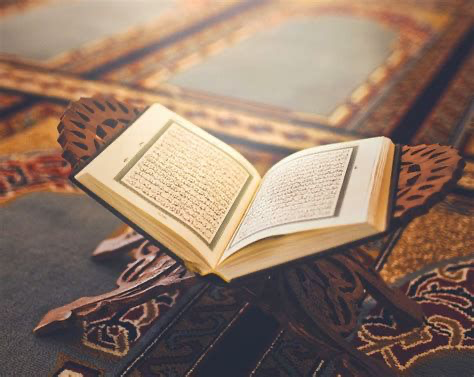
position in the hearts of the people; they love it greatly because it is the
language of the Qur’an, the language of the noble Messenger (peace be upon
him), the language of the people of Paradise, and the language of all religious
sources such as Hadith, Tafsir, Fiqh, and history.
Arabic & Religious Schools
The Muslims
of Pakistan gained independence from British colonialism, which had
controlled Pakistan for nearly one hundred years. The British often fought
against the Urdu language in this land they considered part of England, using
all means of propaganda to portray to Islamic peoples that Urdu was unsuitable
for the requirements of modern science and thought. They made English education
compulsory by law. As for Arabic, it had no status under the British, and the British
government opposed education in Arabic, except in religious schools
that had long taught Arabic and Islamic sciences. From these schools graduated
many great scholars and eminent sheikhs, despite the persecution they suffered
from the British against them and Muslim scholars. Among those scholars worth
mentioning are Sheikh Abdul Haq Muhaddith Dehlawi, Shah Waliullah, and Sheikh
Abdul Hakim Sialkoti. In our present time, professors such as Abdul Aziz
Maimani in Pakistan and Sayyid Abul Hasan Ali Nadwi in India graduated from
these schools.
Arabic Not Taken Its Rightful Place
About thirty years have passed since Pakistan appeared on
the world map, but unfortunately Arabic has not taken its rightful place in
this Islamic state, despite independence and liberation from colonialism.
It has had no noticeable presence during this period and has
not flourished, although it was expected to spread in the country. Despite the
great progress achieved by the Pakistani nation in education in agriculture,
industry, medicine, engineering, and other fields, it faces difficulties and
problems in teaching Arabic, including:
- The
people of Pakistan were liberated from British
colonialism on the basis of Islam and obtained a homeland through
their continuous effort, but they did not achieve cultural independence
from the British. English remains a compulsory official language in
Pakistan to this day, and every student must study it up to the bachelor’s
level. By contrast, Arabic is only an optional language.
- The
second problem: Arabic is not the language of the Pakistani people, nor is
Pakistan a region that speaks this language; therefore, it is taught as a
foreign language in schools, colleges, and universities. In fact, it is
not taught in English-model schools, and science students cannot choose
this language in schools and colleges.
- The
third problem worth mentioning: the multiplicity of local languages in
Pakistan restricts the teaching of Arabic.
- Urdu
is an official language like English, whereas Arabic is taught through
Urdu in government schools and colleges. (In the Turkish era, Arabic
itself was taught through Turkish, and grammar and morphology were
authored in Turkish, as Dr. Mazen Mubarak pointed out in his book Arabic
Language in Higher Education and Scientific Research.)
- Arabic
is not taught as a living language even in religious schools where
clerics, scholars, and sheikhs teach Arabic Islamic sciences. The
government is not responsible for them, and students who wish to join
those schools must study all sciences in Arabic. Undoubtedly, students
read books of Tafsir, Hadith, Fiqh, Logic, Morphology, Grammar, and others
in Arabic, understand them, and memorize the rules thoroughly. Yet
evidence shows that most of them cannot speak it fluently. As for
professors and sheikhs, they teach Islamic sciences and suffice with that,
without giving special attention to teaching the Arabic language itself.
- Arabic
faces another problem: lack of care from officials, who do not pay
attention to its advancement as it deserves.
- Arabic
is not taught as a subject in educational institutes and colleges except
in one or two colleges in Pakistan. In reality, Arabic students do not
gain admission to those colleges and find no place in them.
- The
number of Arabic learners is small in government schools and colleges.
They also believe Arabic is a difficult language with no benefit in their
practical lives; therefore, they prefer other sciences over Arabic and
have no desire for it.
- The
ninth problem is the lack of employment for graduates. Students spend most
of their lives studying Arabic sciences, obtain academic degrees such as
master’s, yet find no work. Their hopes are dashed, others are influenced
by them, Arabic is despised, and other sciences are seen as the means to
reach important positions in government administrations.
- The
tenth problem is the lack of necessary facilities for the advancement of
Arabic. For example, there is no Arabic language laboratory in the modern
sense anywhere in Pakistan, nor any classroom for Arabic study in most
schools and colleges. Students study Arabic under trees.
- The
eleventh problem is that methods of teaching Arabic are not modern.
Professors do not use them in teaching Arabic; they teach without using
aids, discussions, or exercises. Thus, they fail to arouse interest and
desire in students to learn Arabic. Professors themselves are not able to
speak the language nor acquire teaching skills.
- The
salary of an Arabic teacher in schools is less than that of an English or
science teacher. This is also a reason for backwardness in Arabic
education.
- The
thirteenth problem, which I consider the greatest, is that our teaching
system is not free from defects and disorganization. Pakistan has had
three systems of education since its beginning: the religious school
system, the government school system, and the English-model school system.
Each differs from the other, and this is also a reason for the
backwardness of Arabic in Pakistan.
Let the curricula of education and teaching be as in Egypt
and Saudi Arabia.
Arabic
is one of the most important languages in the world for every Muslim in
Pakistan, who wishes to study it and master speaking and writing it, because
the importance of Arabic lies in learning religious matters. Now the Pakistani
government has honored Arabic in its constitution and believes that the
advancement and spread of Arabic is necessary, because it is our religious
language on the one hand, and a strong bond to strengthen fraternal and
friendly relations between Islamic and Arab countries on the other.
The government established the People’s Open University in Islamabad
to deliver knowledge to every home, especially to those who, for some reason,
cannot gain admission to schools, colleges, and universities, through
correspondence, letters, radio, television, tape recorders, and other means.
Its first basic program was the spread of Arabic. To achieve
this blessed goal, the People’s Open University works day and night with full
enthusiasm and complete sincerity, exerting the widest efforts to generalize
Arabic among the Pakistani people. It opened Arabic education centers first in
big cities and will open others throughout Pakistan.
The university sent a group of professors to the Arabic
Language Institute at Riyadh University to train in the latest methods of
teaching Arabic to non-native speakers. Riyadh University bore all the expenses
in this regard, and for that it deserves our sincere thanks from us and from
the entire Pakistani people.
We affirm to all officials in the Ministry of Higher
Education and Riyadh University that we may serve the language of the Qur’an in
our country, and we are keen to benefit as much as possible from this
opportunity granted to us.
---------
Ghulam Haidar Jeshti wrote this article
& Published in Al-Mujtama in issue (388), 19 Rabi’ al-Awwal 1398 AH / 28 February 1978 AD, p. 34.