







Though Present… Domestic Violence in Kuwait Remains Below Global Levels
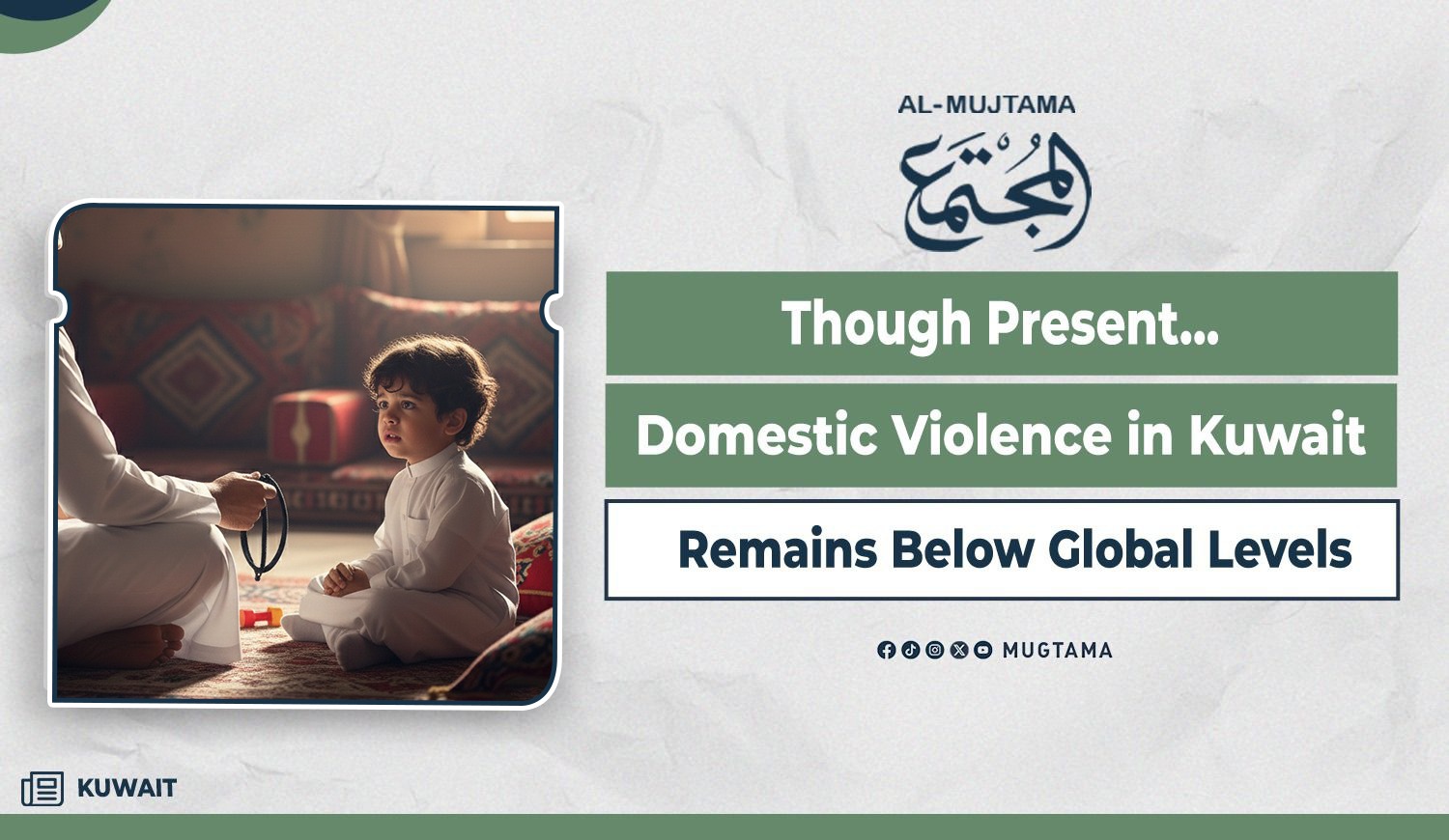
Domestic and child abuse cases are no longer just passing figures in official reports, but alarming indicators of a social challenge that demands firm institutional response. With 340 reports filed in the last quarter of this year, the urgent need to strengthen protection systems has become evident, ensuring that the Kuwaiti family remains a safe haven rather than a place of danger.
Reports Reveal the Scale of the Challenge
According to recent statistics from the Supreme
Council for Family Affairs, the cases included 143 reports of domestic
violence, 197 cases of child abuse—mostly at the hands of relatives— and 11
shelter cases handled under approved procedures.
While these numbers reflect growing awareness and willingness to report,
they also highlight the depth of the problem and the need to intensify
preventive efforts.
Comprehensive Government Response
In a move underscoring the state’s commitment to this sensitive issue,
Minister of Social Affairs and Family & Childhood Affairs Dr. Amthal
Al-Huwaila affirmed that domestic and child abuse are national priorities
affecting the security
and stability of society. She stressed that government institutions
operate within an integrated framework focused on prevention, early
intervention, and providing protection and care for victims.
She explained that efforts include developing legislation, strengthening
shelter services, expanding psychological and social support, and enhancing
coordination among relevant agencies to safeguard families and uphold
children’s rights to the highest standards.
New Regulations for Protection Centers
The minister revealed the introduction of internal regulations to
organize work at domestic violence protection centers, aimed at improving
efficiency and service quality while respecting Kuwaiti social values.
The regulations cover mechanisms for receiving cases, assessing needs,
and providing appropriate support—whether temporary shelter, protection orders,
or psychological, social, and legal
counseling.
Victim Support Fund: A Long-Awaited Step
In a pivotal development, Al-Huwaila announced the formation of a board
of directors for the Victim
Support Fund for Domestic Violence, resuming its operations in line
with Law No. 16 of 2020 after years of delay.
She noted that the board has begun setting clear mechanisms for receiving
donations and allocating funds, with coordination underway with charitable
organizations to direct part of their contributions toward supporting citizens
inside Kuwait.
Parallel Psychological and Rehabilitation Support
As part of the integrated protection system, the Guidance
and Rehabilitation Department conducted 56 counseling sessions and
provided 54 phone consultations in psychological and specialized fields, aiming
at early intervention and strengthening family stability.
Partnerships and Community Awareness
The minister also pointed to the Council’s plans to establish
partnerships with civil
society organizations and government bodies to build a national
strategy for family awareness. This includes legal consultations, training
programs, and capacity-building for professionals in the field of social
protection.
A Shared National Responsibility
The statistics on domestic violence in Kuwait reveal a reality that calls
for vigilance, while also reflecting serious governmental efforts to rebuild
the protection system on stronger legislative and organizational foundations.
Between the numbers and the response, the key message remains: protecting
the family is not a choice—it is a shared national responsibility.
Regional Context: The Gulf and Arab World
While Kuwait’s figures highlight a pressing challenge, similar patterns
are evident across the Gulf region and the wider Arab world. In Saudi Arabia
and the United Arab Emirates, official hotlines and shelter centers have
reported rising cases of domestic and child abuse, reflecting both increased
awareness and persistent social pressures. Arab
Barometer surveys further show that many citizens across the region
believe violence against women and children has grown in recent years,
underscoring the need for stronger enforcement of protective laws and more
effective community outreach.
Global Perspective
Globally, the World
Health Organization estimates that nearly one in three women—over 736
million worldwide—have experienced domestic violence at least once in their
lives. This places Kuwait’s numbers within a broader international crisis that
transcends borders and cultures. While many countries have advanced legal
frameworks and support systems, progress remains uneven, and the gap between
legislation and implementation continues to challenge societies everywhere.
Kuwait’s recent initiatives, such as the Victim Support Fund and new protection
center regulations, align with global best practices, signaling a serious
commitment to confronting the issue at both national and international levels.
Sources:
1.
Supreme Council for
Family Affairs (Kuwait), Al-Qabas
2.
National Family
Safety Program (Saudi Arabia);
3.
Dubai Foundation for
Women and Children (UAE)
4.
Arab Barometer
surveys (2023–2025)
5.
World Health
Organization (WHO) reports (2021, updated 2023)